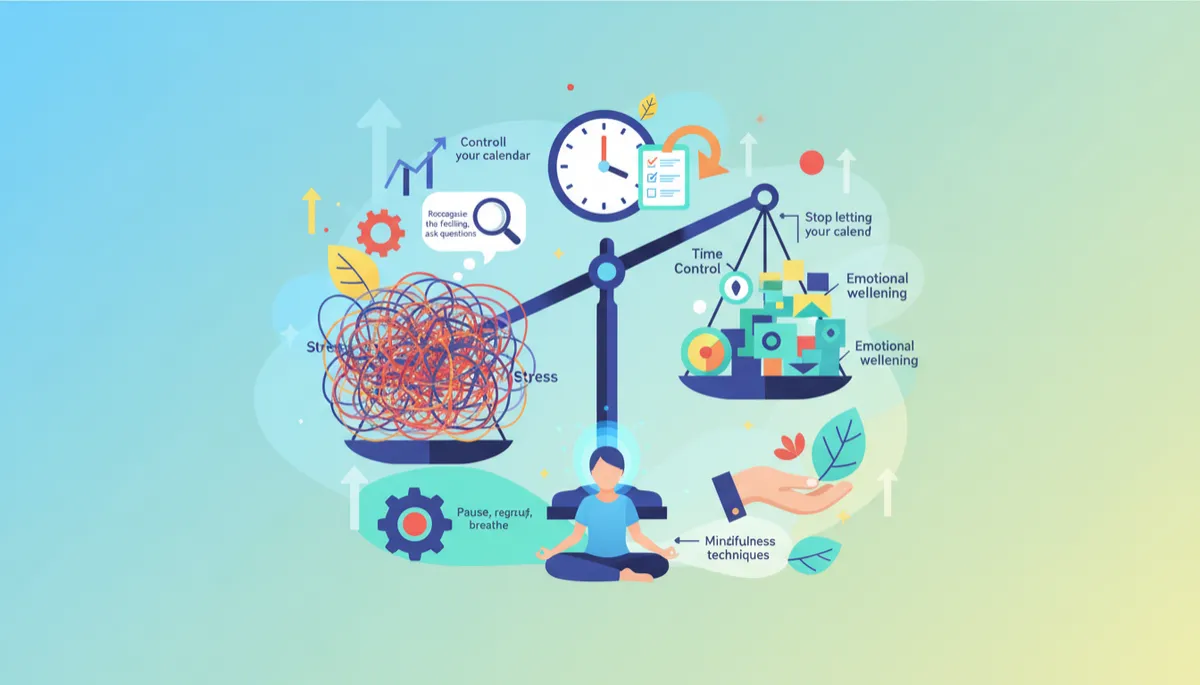
Take Control of Your Time Before Stress Takes Control of You
Stress Management, Productivity, Emotional Well-being
How to Take Back Control of Your Time and Energy
In fast-paced professional environments, stress and overwhelm can quietly become the norm. Yet sustainable success depends on your ability to manage pressure, maintain clarity, and protect your emotional well-being. This guide offers practical Stress Management strategies, Productivity Tips, and Mindfulness Techniques to help you regain Time Control and perform at a high level without burning out.
Step 1: Recognize the Feeling Before It Runs Your Day
Effective Stress Management begins when you recognize the feeling early, rather than waiting until you are exhausted, reactive, or short-tempered. Notice the signals: a racing mind, tight shoulders, shallow breathing, or irritability. Label what is happening: “I am experiencing stress,” or “I feel overwhelm building.” Naming the state creates just enough distance to respond thoughtfully instead of reacting automatically.
💡 Pro Tip: Set a brief reminder on your phone three times a day to check in and recognize the feeling you are in—calm, focused, rushed, or overwhelmed.
Step 2: Ask Questions to Turn Overwhelm into Clarity
When pressure spikes, your brain often moves into survival mode. To create Overwhelm Relief, pause and deliberately ask questions. For example:
“What absolutely must be done today, and what can wait?”
“Where is one small win I can create in the next 15 minutes?”
“Who can help, or what can be delegated?”
These questions shift your focus from feeling stuck to taking action. They transform vague overwhelm into specific decisions, which is the foundation of Overwhelm Relief and better emotional well-being.
Step 3: Take Control of Your Time Instead of Chasing the Clock
Many professionals feel trapped by back-to-back meetings, endless emails, and shifting priorities. The turning point is to take control of your time by intentionally controlling your calendar. Block focused work sessions, set boundaries around meeting availability, and protect short recovery breaks. This is how you stop letting the clock lead and start leading your day.
Review your week and ask, “Does my schedule reflect my top priorities, or other people’s urgencies?” Real Time Control requires saying no to low-impact activities so you can say yes to the work that truly matters. This is not only a Productivity Tip; it is a direct investment in your emotional well-being.
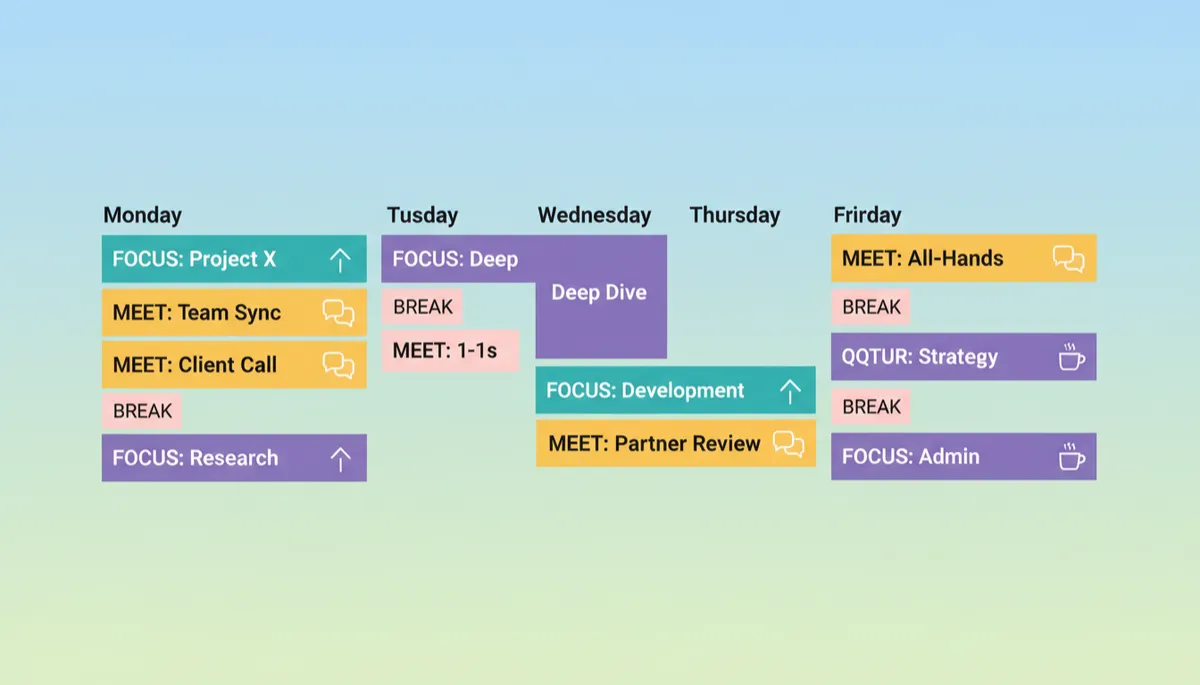
Intentional calendar design reduces decision fatigue and restores a sense of control.
Step 4: Use Mindfulness Techniques to Pause, Regroup, and Breathe
Mindfulness Techniques are not about emptying your mind; they are about training your attention. In demanding roles, the ability to pause, regroup, and breathe on purpose is a competitive advantage. Try this 60-second reset between meetings:
Sit upright, place both feet on the floor, and close your eyes or soften your gaze.
Inhale slowly through your nose for a count of four, then gently breathe out for a count of six.
On each exhale, mentally say the word “release” and notice any tension leaving your shoulders and jaw.
This simple practice lowers physiological stress, supports emotional well-being, and prepares you to enter the next task with clarity. Over time, these micro-pauses build resilience and make Stress Management far more achievable.
📌 Key Takeaway: A 60-second mindful pause can be more valuable than 10 rushed minutes of unfocused work.
Step 5: Prioritize with Intention for Sustainable Productivity
High performers are not doing everything; they prioritize relentlessly. As you plan your day, identify your top three outcomes. Ask, “If I only accomplish these three items, will today still be successful?” This simple filter guides your actions and prevents you from being pulled into constant reactivity.
Additional Productivity Tips include batching similar tasks, setting clear start and end times, and using short sprints of focused work followed by quick breaks. When you prioritize in this way, you naturally take control of your time and reduce the mental clutter that fuels overwhelm.
Step 6: Protect Your Emotional Well-being Like a Strategic Asset
Your ability to think clearly, make sound decisions, and lead effectively depends on your emotional well-being. Build small, consistent habits that support it: regular movement, quality sleep, meaningful conversations, and boundaries around after-hours communication. These are not indulgences; they are strategic choices that directly impact performance.
When you notice rising stress, remember that you have options. You can pause, regroup, and breathe. You can ask questions, re-evaluate your commitments, and adjust how you are controlling your calendar. Above all, you can stop letting the clock lead and intentionally design a workday that supports both high performance and personal health.
Bringing It All Together
Stress Management for professionals is not about eliminating pressure. It is about building systems and habits that keep you grounded when demands are high. When you recognize the feeling of overwhelm early, deliberately ask questions, and take control of your time by controlling your calendar, you create space to think clearly. When you regularly pause, regroup, and breathe, you protect your emotional well-being and unlock sustainable productivity.
Implement one or two of these practices this week. As you do, you will notice that Time Control increases, your focus sharpens, and your energy stabilizes. Over time, these shifts add up to a professional life where you lead your schedule, your work, and your stress—instead of allowing them to lead you.
Recommended Books and Podcasts
Books
Slow Productivityby Cal Newport— A practical approach built around doing fewer things, working at a natural pace and focusing on quality without constant overload.
Atlas of the Heartby Brené Brown— Helpful for identifying and understanding the emotions behind what we are experiencing.
Four Thousand Weeksby Oliver Burkeman — A refreshing examination of our limited time and why trying to accomplish everything is an impossible goal.
Essentialismby Greg McKeown — A strong resource for deciding what truly matters and removing commitments that distract from it.
Podcasts and Videos
Deep Questions with Cal Newport— Conversations about focus, productivity and creating a less distracted professional life.
Feel Better, Live Morewith Dr. Rangan Chatterjee— Episodes addressing stress, anxiety, habits and overall well-being.
Tools for Managing Stress & Anxietyfrom Huberman Lab— A science-focused discussion of practical tools for responding to stress.

